
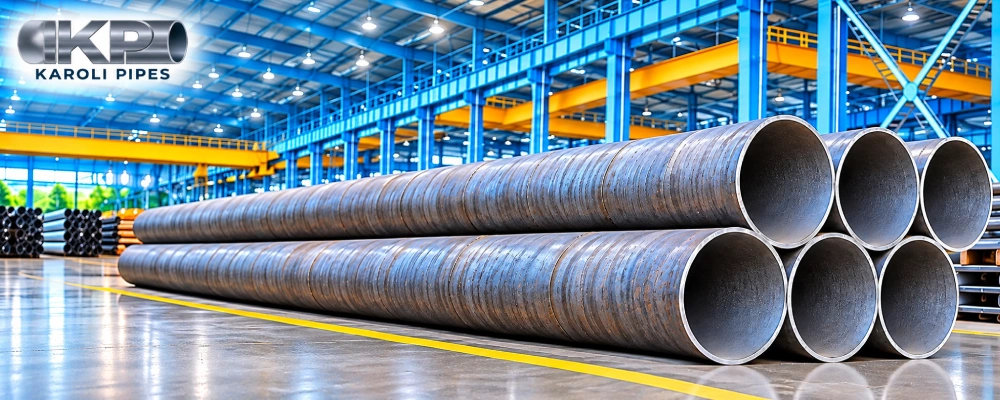
What Are the Benefits of Custom-Fabricated MS Pipes for Industrial Piping, Construction and Infrastructure Projects in Hyderabad?
Custom-fabricated Mild Steel (MS) Pipes are widely used in industrial piping, construction, manufacturing and infrastructure projects because they can be manufactured or modified to meet specific project requirements. Unlike standard ready-made pipes, fabricated MS pipes can be customised according to required dimensions, lengths, shapes, thicknesses and application needs. For businesses searching for custom-fabricated MS pipes in Hyderabad, selecting the right pipe configuration can help improve installation accuracy, structural suitability and project efficiency.
Karoli Pipes caters to industrial and infrastructure requirements involving mild steel pipes and fabrication services. Understanding the types, features, benefits, fabrication methods and technical considerations can help buyers make informed purchasing decisions.
What Are Custom-Fabricated MS Pipes?
Custom-fabricated MS pipes are mild steel pipes that undergo fabrication processes to achieve specific dimensions, shapes or configurations required for particular applications. Depending on project requirements, fabrication may involve cutting, bending, welding, shaping and end preparation.
These pipes are suitable for projects where standard pipe dimensions or configurations may not meet the required installation or engineering specifications.
How Are Custom-Fabricated MS Pipes Different from Standard MS Pipes?
- Availability: Standard MS pipes are available in predefined sizes, whereas custom-fabricated MS pipes are manufactured according to specific project requirements.
- Configuration Options: Standard MS pipes have limited configuration options, while custom-fabricated pipes can be produced in different shapes and configurations.
- Site Modifications: Standard MS pipes may require additional modifications at the installation site, whereas custom-fabricated pipes can reduce certain on-site adjustments.
- Dimensions: Standard MS pipes are selected from available dimensions, while custom-fabricated pipes are produced according to specified measurements.
- Applications: Standard MS pipes are suitable for general applications, whereas custom-fabricated MS pipes are suitable for specialised industrial and project-specific requirements.
What Are the Different Types of Custom-Fabricated MS Pipes?
Different types of fabricated mild steel pipes are selected based on project design, structural requirements and operating conditions.
1. Straight-Cut MS Pipes
Straight-cut pipes are prepared according to specified lengths. They are commonly used in industrial piping, structural frameworks, equipment manufacturing and general fabrication work.
2. Bent MS Pipes
Bent MS pipes are shaped to achieve specific angles or curved configurations. They can help accommodate pipeline routing requirements and installations where straight pipe sections are unsuitable.
3. Welded MS Pipe Assemblies
Welded pipe assemblies are created by joining pipe sections or connecting compatible components through suitable welding methods. They are used in fabrication projects requiring customised arrangements.
4. Large-Diameter Fabricated MS Pipes
Large-diameter fabricated pipes are used in applications where project designs require larger pipe dimensions for fluid transportation, industrial installations or infrastructure work. Their dimensions and construction should be selected according to engineering requirements.
5. Special-Dimension MS Pipes
These pipes are fabricated according to specific diameter, length, thickness or configuration requirements. They are useful for customised industrial equipment and project-specific installations.
What Are the Key Features of Custom-Fabricated MS Pipes?
The features of fabricated MS pipes depend on the raw material, fabrication process and final engineering specifications.
Important features include :
- Customised Dimensions: Pipe length, diameter and thickness can be selected according to project requirements.
- Fabrication Flexibility: Cutting, bending and welding help achieve specific configurations.
- Structural Strength: Mild steel provides useful mechanical properties for many industrial and construction applications.
- Weldability: Suitable mild steel grades can be joined using appropriate welding procedures.
- Versatile Applications: Fabricated pipes can support different industrial, structural and infrastructure requirements.
- Project-Specific Design: Fabrication can help accommodate installation layouts and engineering drawings.
What Are the Benefits of Custom-Fabricated MS Pipes?
Custom-fabricated pipes offer several practical advantages for industrial buyers, contractors and infrastructure developers.
1. Better Suitability for Project Requirements
Every industrial project has different dimensional and installation requirements. Custom fabrication helps prepare pipe sections according to the required measurements and configurations.
2. Improved Installation Planning
Pre-cut and pre-fabricated pipe sections can simplify certain installation activities. This may reduce additional cutting, shaping and modification work at the project site.
3. Flexibility in Design
Fabricated MS pipes can be prepared in different lengths, shapes and arrangements. This flexibility is useful when working with complex layouts or customised machinery.
4. Support for Industrial Fabrication
Customised pipe sections are useful in manufacturing equipment, industrial structures, support systems and piping assemblies.
5. Efficient Material Utilisation
Accurate measurements and fabrication planning can help minimise unnecessary material cutting and wastage. Actual savings depend on project design and fabrication practices.
6. Compatibility with Different Applications
Custom-fabricated pipes can be designed for different operating environments, provided the material grade, dimensions and fabrication quality meet the required engineering standards.
What Technical Specifications Should You Check Before Ordering Fabricated MS Pipes?
- Material Grade: Confirm the required mild steel grade according to project specifications.
- Outside Diameter: Specify the required pipe diameter.
- Wall Thickness: Select the appropriate thickness based on design and load requirements.
- Pipe Length: Confirm individual pipe section lengths as per project requirements.
- Fabrication Type: Specify required fabrication processes such as cutting, bending, welding, and shaping.
- Welding Requirements: Confirm welding procedures, quality requirements, and inspection needs.
- Surface Finish: Specify the required surface condition and finishing requirements.
- Dimensional Tolerance: Define acceptable variations in measurements and dimensions.
- Testing Requirements: Confirm applicable inspection procedures, quality checks, and testing standards.
Why Are Pipe Diameter and Thickness Important?
Pipe diameter affects the available internal flow area and overall dimensions. Wall thickness influences the pipe's strength and ability to withstand the intended loading or operating pressure.
The correct combination should be determined using engineering calculations, applicable standards and project specifications.
Why Should Material Grade Be Verified?
Different mild steel grades have different chemical and mechanical properties. Buyers should confirm that the selected grade meets the requirements of the intended application rather than choosing a material based only on appearance or price.
Why Is Material Quality Important in MS Pipe Fabrication?
The quality of raw material directly influences the performance and reliability of fabricated pipe sections.
Important material-quality considerations include:
- Chemical Composition: Verify that the steel grade meets the required material specification.
- Mechanical Properties: Check relevant tensile strength, yield strength and elongation requirements.
- Surface Condition: Inspect for visible defects, excessive rust, cracks or damage.
- Dimensional Accuracy: Ensure that the supplied material meets the specified dimensions.
- Weldability: Select material suitable for the intended welding process.
- Material Traceability: Request relevant material test certificates when required.
For projects in Hyderabad, buyers should communicate their operating environment and application requirements before finalising the material.
How Are Custom-Fabricated MS Pipes Manufactured?
The fabrication process depends on the required pipe configuration, material dimensions and engineering drawings.
Step 1: Requirement Analysis
The project requirements are reviewed, including pipe diameter, thickness, length, quantity and intended application.
Step 2: Material Selection
The suitable mild steel grade and raw material dimensions are identified based on the project specifications.
Step 3: Cutting and Preparation
Pipe sections are cut to the required lengths. Edges may be prepared for joining or other fabrication operations.
Step 4: Bending and Shaping
Where required, suitable machinery and fabrication methods are used to achieve the specified shape or angle.
Step 5: Welding and Assembly
Pipe sections and compatible components are joined using appropriate welding procedures.
Step 6: Inspection and Finishing
The fabricated sections are checked for dimensional accuracy, visible defects, joint quality and surface condition. Additional finishing or protective treatment may be performed when specified.
Where Are Custom-Fabricated MS Pipes Used?
Custom-fabricated mild steel pipes are used across several industrial and infrastructure sectors.
1. Industrial Piping Systems
Used in piping arrangements for industrial facilities, manufacturing units and utility installations. Pipe material and dimensions must suit the transported medium and operating conditions.
2. Construction Projects
Used in structural fabrication, building installations, support frameworks and other construction-related requirements.
3. Infrastructure Development
Fabricated pipes can support water transportation, drainage-related installations and other infrastructure projects, depending on engineering specifications.
4. Manufacturing Industries
Used in machinery fabrication, equipment assemblies, industrial structures and customised production systems.
5. Engineering and Fabrication Units
Useful for customised fabrication work requiring specific pipe dimensions, bending and welding arrangements.
6. Water Transportation Projects
Suitable MS pipe configurations may be used in water pipeline applications when the material, internal and external protection and design specifications are appropriate.
How Do You Choose the Right Custom-Fabricated MS Pipes in Hyderabad?
Selecting the right fabricated MS pipes requires more than comparing prices. Buyers should evaluate the technical requirements and supplier capabilities.
Consider the following factors:
- Define the Application: Identify whether the pipes are required for structural work, water transportation, industrial piping or machinery fabrication.
- Confirm Pipe Dimensions: Specify the required diameter, length and wall thickness.
- Select the Material Grade: Choose a suitable grade based on engineering and operating requirements.
- Share Fabrication Drawings: Provide technical drawings or measurements to reduce misunderstandings.
- Check Fabrication Quality: Review cutting accuracy, bending quality, welding and finishing.
- Verify Standards: Confirm applicable IS, ASTM or other project-specific standards.
- Compare Quotations: Evaluate material specifications, fabrication scope, inspection, delivery and overall cost.
- Check Supplier Experience: Consider the supplier's ability to understand and fulfil your project requirements.
Why Choose Karoli Pipes for Custom-Fabricated MS Pipes in Hyderabad?
Selecting a suitable pipe supplier is important for maintaining project requirements, material consistency and fabrication quality.
Karoli Pipes serves customers looking for mild steel pipes and fabrication-related requirements. When discussing a customised order, buyers should share their pipe dimensions, material grade, thickness, fabrication drawings and application details.
This helps establish the required product configuration and allows the supplier to assess the project requirements more accurately.
Before placing an order, discuss:
- Required MS pipe dimensions and thickness
- Fabrication and bending requirements
- Material grade and quality documentation
- Welding and finishing specifications
- Project quantity and delivery schedule
- Inspection and applicable testing requirements
For customers in Hyderabad, clear technical communication helps ensure that the selected fabricated MS pipes match the intended application.
Frequently Asked Questions
1. What Are Custom-Fabricated MS Pipes?
They are mild steel pipes modified through cutting, bending, welding or other fabrication processes to meet specific project dimensions and configurations.
2. What Are the Main Applications of Fabricated MS Pipes?
They are used in industrial piping, construction, infrastructure, machinery manufacturing, structural fabrication and engineering projects.
3. Can MS Pipes Be Fabricated According to Custom Dimensions?
Yes. Suitable MS pipes can be cut, bent and fabricated according to project drawings, material limitations and manufacturing capabilities.
4. How Do I Select the Right Thickness for Fabricated MS Pipes?
Thickness should be selected based on the intended application, loading conditions, operating pressure, corrosion allowance and applicable engineering standards.
5. Are Custom-Fabricated MS Pipes Suitable for Water Pipelines?
They can be suitable when the material grade, wall thickness, joint design and internal and external corrosion protection meet the pipeline requirements.
6. What Is the Difference Between Standard and Fabricated MS Pipes?
Standard MS pipes are supplied in available dimensions, whereas fabricated MS pipes are modified to meet specific project requirements.
7. What Details Should I Provide When Ordering Fabricated MS Pipes?
Provide the material grade, diameter, thickness, length, quantity, fabrication drawings, finishing requirements and intended application.
8. Where Can I Find Custom-Fabricated MS Pipes in Hyderabad?
You can contact Karoli Pipes in Hyderabad to discuss mild steel pipe and fabrication requirements and confirm suitable product options.
